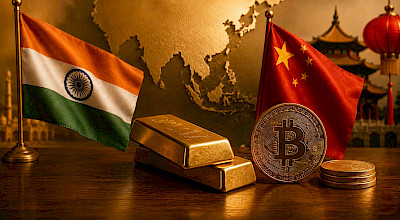
Whenever I see the U.S. media suggest that cryptocurrencies, especially Bitcoin, will replace gold, I give my head a shake and remind myself that there’s a big world out there consistently voting with its wallet.
The only novelty today is the scale at which the experiment is being run and the amnesia with which it’s being conducted.
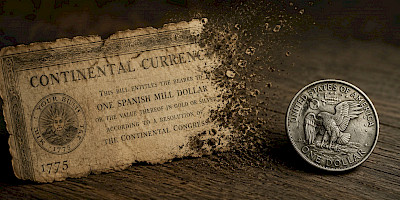
Those who imagine the outcome will be any different this time around might usefully recall that the Continental Congress also believed its circumstances were unique—until the notes stopped buying anything at all.
We all die. In some ways, that’s a good thing; including in my case, though I would like to stick around long enough to see how this latest chapter of human folly plays out.
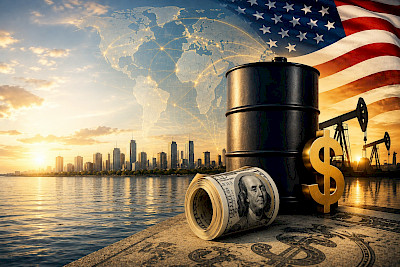
For the past 50 years, the petrodollar has served America’s purposes ideally; much to the chagrin of an increasingly large part of the world. Today, the dollar’s gradual retreat from its outsized role is inevitable. Like the tides, and like empires, reserve currencies rise and fall in predictable patterns.
If the petrodollar keeps losing its hold, the U.S. dollar will lose its reserve status. If that happens, the entire financial house of cards, built on the assumption that the world will always need dollars, will come crashing down.
The record-high level of debt across government, corporate, and consumer balance sheets is no secret. It’s been the elephant in the room for a long time, and it’s growing fatter by the decade. Its knees are beginning to buckle. We’ve reached the point where the entire global financial system looks like one giant bubble.
I’ve spent decades in the trenches of global finance. I started wiring millions of dollars around the world when a single Telex error could kill a financing deal. In my early days at Merrill Lynch and then Yorkton Securities in Vancouver, in the late 1970s and early 80s, international payments were slow, opaque, and prone to human error.